The Hidden Water Problem Inside Every Fire Loss
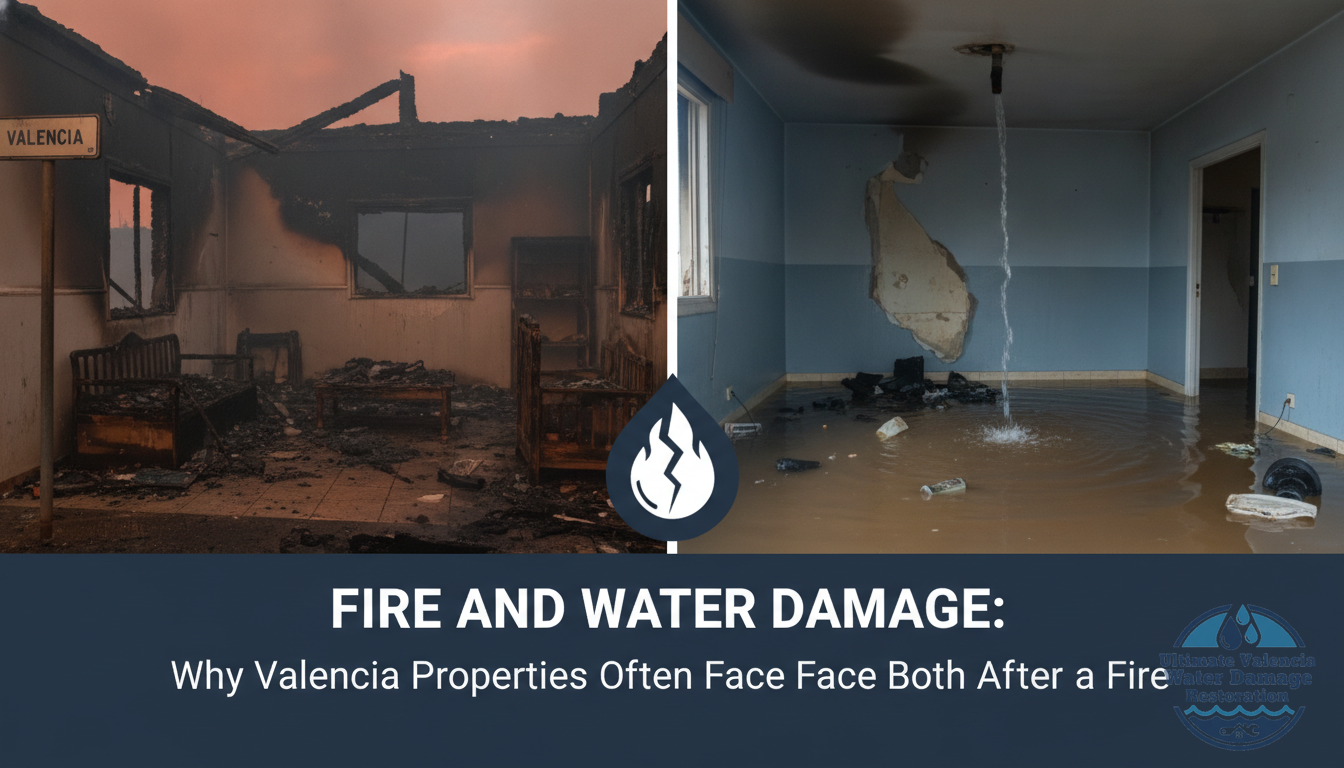
When a fire breaks out in a Valencia home or commercial property, the focus is immediately and understandably on the flames. But once the fire department leaves and the smoke begins to clear, property owners often discover a second major problem that was created in the process of putting the fire out: extensive water damage caused by firefighting efforts. Fire hoses and suppression systems can discharge thousands of gallons of water in a matter of minutes, saturating walls, floors, ceilings, and personal belongings throughout areas of the property that the fire itself may never have reached.
This combination of fire and water damage makes post-fire restoration one of the most complex and technically demanding types of property recovery available. Understanding how both hazards interact — and why they must be addressed simultaneously by a qualified team — can help Valencia homeowners navigate the recovery process more effectively and avoid costly mistakes.
How Firefighting Water Damages Your Property
The water discharged during firefighting efforts does not stop at the area of the fire itself. It flows through the path of least resistance — through flooring assemblies, down wall cavities, through ceiling penetrations, and into lower levels of the structure. A fire that begins in a second-floor bedroom can result in significant water damage to the first floor and even the basement or crawl space as firefighting water follows gravity through the building.
This water is also not clean. It carries soot, ash, char particles, fire suppressant chemicals, and any contaminants that were present on the surfaces it contacted, making post-fire water a category-2 or category-3 contamination concern depending on the nature of what burned. This is why post-fire water damage restoration requires the same thoroughness and care as any other water intrusion event — and why simply mopping up visible water is never sufficient.
The Timeline of Damage After a Fire
Fire and smoke damage do not stop the moment the flames are extinguished. The corrosive byproducts of combustion continue to cause damage for hours and days after a fire event, and the combination with standing water creates an accelerated deterioration environment. Here is a general timeline of what happens:
- Within minutes: Soot deposits on all surfaces in the smoke path. Porous materials begin absorbing smoke odor molecules. Synthetic materials that burned release acidic residues that immediately begin etching metal fixtures, glass, and countertop surfaces.
- Within hours: Soot continues to penetrate deeper into porous surfaces. Discoloration and corrosion become visible on metals. Firefighting water begins wicking into wall cavities, subfloors, and insulation. Without prompt water extraction, secondary water damage begins escalating.
- Within 24–72 hours: Acid soot causes permanent etching on glass, chrome, and marble surfaces if not cleaned. Wood surfaces begin warping and swelling from water saturation. Without extraction and drying, mold colonization begins in saturated materials.
- Beyond 72 hours: Smoke odor becomes increasingly difficult to eliminate as molecules become more deeply embedded in porous materials. Structural materials weakened by heat and water may begin to fail. Mold growth becomes visible and remediation becomes significantly more complex and expensive.
This timeline underscores why early intervention by a professional team capable of addressing both fire and smoke damage restoration and concurrent water damage is so critical to a successful recovery outcome.
What Fire and Smoke Damage Restoration Actually Involves
Professional fire restoration is far more complex than simply cleaning visible soot from surfaces. A structured restoration process includes multiple phases, each requiring specialized equipment, materials knowledge, and technical expertise:
- Emergency securing of the structure: Once fire authorities release the property, emergency board-up and roof tarping secures the structure against weather, vandalism, and unauthorized entry while full restoration is planned and permitted.
- Water extraction and structural drying: Firefighting water must be extracted and the structure dried to IICRC standards before smoke and soot cleaning can be fully completed. Drying in a fire-damaged structure is complicated by the fact that HVAC systems cannot be used until ductwork is inspected and cleaned, requiring standalone drying equipment.
- Soot and smoke cleaning: Different soot types require different cleaning methods. Wet soot from smoldering fires requires wet-cleaning agents, while dry soot from fast-burning fires responds better to dry-chemical sponging. Protein residue from kitchen fires requires enzymatic cleaning agents. Applying the wrong method to a surface can permanently drive soot deeper into the substrate, making further cleaning impossible.
- Odor neutralization: Smoke odor cannot be eliminated by surface cleaning alone because the odor molecules are embedded in porous materials throughout the structure. Professional odor elimination uses a layered approach including hydroxyl generators, thermal fogging agents, and in unoccupied spaces, ozone treatment to neutralize odor molecules at the molecular level rather than masking them.
- HVAC and ductwork cleaning: Smoke and soot circulate through HVAC systems during a fire and deposit on interior duct surfaces. Without duct cleaning, the system will redistribute smoke residue and odor every time it operates, preventing true odor elimination.
- Structural repairs and reconstruction: After all hazardous materials are removed and all surfaces are cleaned and dried, structural repair and reconstruction restores the property to its pre-loss condition.
Mold: The Third Hazard After a Fire
Homeowners dealing with fire and water damage often overlook the third hazard that develops when firefighting water is not fully extracted and dried: mold. The combination of a warm Valencia climate, elevated humidity from firefighting water, and organic building materials is precisely the environment mold needs to thrive. We frequently encounter active mold colonies in fire-damaged properties where the primary focus was placed on soot cleaning while water saturation in walls and subfloors went unaddressed.
If your Valencia property has experienced a fire event, our team assesses moisture conditions throughout the entire structure, not just in the fire-affected area, to ensure that mold prevention through thorough drying is part of the restoration plan from the very beginning. In cases where mold has already developed, we integrate
Questions about restoration in Valencia, CA? We're happy to help — no sales pressure. Call +16614653578 or fill out our online form for a free, no-obligation quote.Talk to a Local Pro