The Connection Between Water Damage and Mold Growth
Water damage and mold go hand in hand. Whenever moisture enters a structure and is not fully extracted and dried within 24 to 48 hours, the conditions become ideal for mold colonization. Mold spores are naturally present in the air both indoors and outdoors — they only need three things to become an active problem: a food source (organic materials like drywall, wood framing, and insulation), the right temperature range (most species thrive between 40°F and 100°F), and moisture. Valencia's warm climate means that temperature is almost never the limiting factor, making fast, thorough drying after any water intrusion event absolutely essential.
Whether the water source was a slab leak, a dishwasher overflow, a roof intrusion during a winter rainstorm, or a flooding event in your crawl space, failing to fully dry affected materials creates a hidden mold problem that can remain invisible behind walls and under flooring for weeks before any visible sign appears.
How Fast Does Mold Really Grow?
This is one of the most common questions we hear from Valencia homeowners after a water loss, and the honest answer is: faster than most people expect. Under ideal conditions — warm temperature, abundant moisture, and an organic substrate — certain mold species can begin germinating within 24 hours and produce visible colonies within 48 to 72 hours. By the time you notice the telltale musty odor or see dark spots appearing along a baseboard or ceiling, the colony may already be well established inside the wall cavity or beneath the flooring material where you can't see it.
This is why professional water damage restoration that fully dries all structural materials — not just visible surfaces — is the most effective mold prevention measure available to homeowners in Valencia and across the Santa Clarita Valley.
Where Does Mold Hide After Water Damage?
Mold is an opportunist that colonizes wherever organic material stays damp long enough. After a water intrusion event, the most common hidden mold locations include:
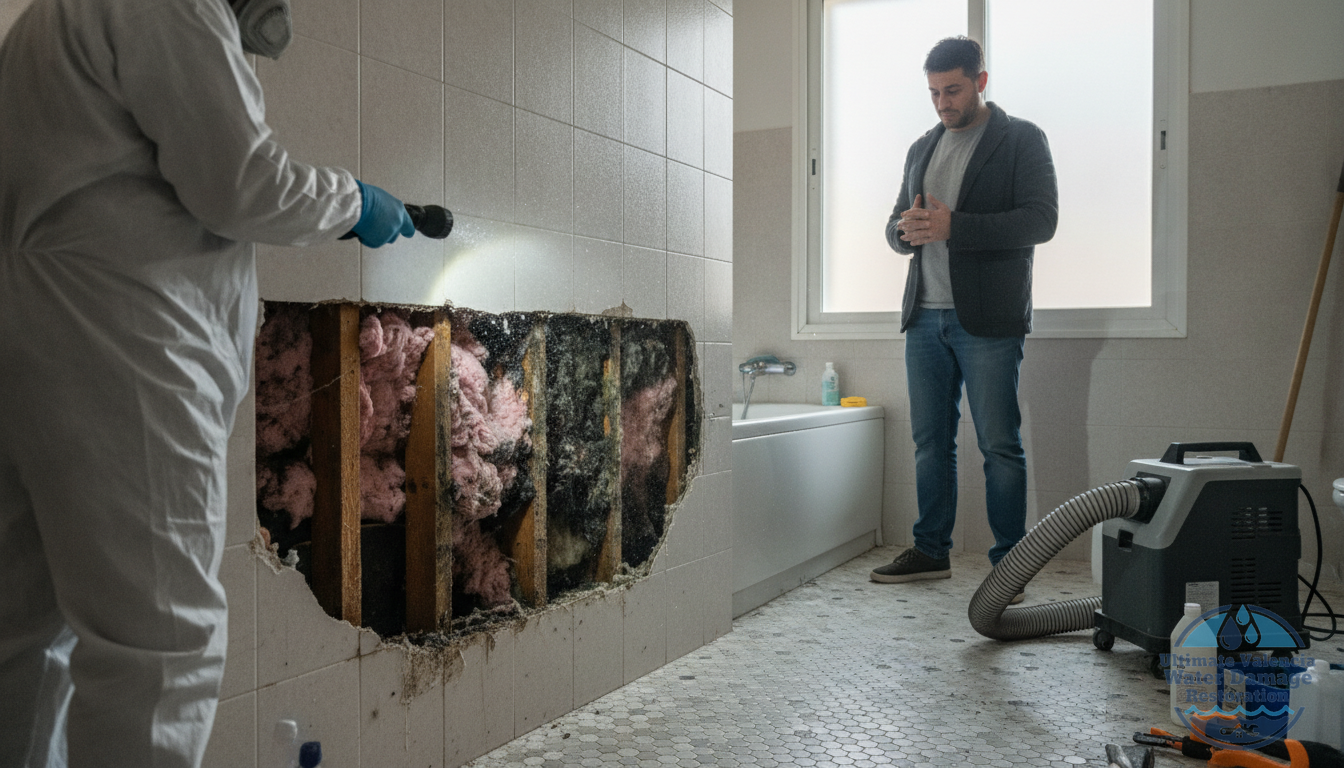
- Inside wall cavities: Drywall is highly porous, and water wicks up through it rapidly. The paper facing on drywall is an ideal mold food source. Once moisture penetrates the interior of a wall, the cavity traps humidity and mold can colonize the back face of the drywall and the wood framing within.
- Under flooring materials: Carpet, carpet pad, laminate, and hardwood all trap water against subfloor materials. Even after the surface dries, the subfloor beneath can remain saturated for days or weeks, feeding mold growth that destroys the structural integrity of the floor assembly over time.
- In crawl spaces: Crawl spaces in Valencia homes are particularly vulnerable to mold after plumbing leaks or seasonal ground moisture events. The enclosed, dark, often poorly ventilated environment is ideal for mold colonization on floor joists, subfloor sheathing, and insulation. Learn more about our crawl space moisture control and encapsulation solutions.
- Behind cabinets and vanities: Kitchen and bathroom cabinetry sits flush against walls and floors, creating concealed spaces where water from appliance leaks and plumbing failures accumulates and stays trapped for extended periods.
- In HVAC systems and ductwork: If moisture enters your HVAC system during a water or fire event, mold can colonize the ductwork and distribute spores throughout your entire living space every time the system runs.
Health Effects of Indoor Mold Exposure
Not everyone reacts to mold in the same way, and the severity of health effects depends on the species of mold present, the concentration of spores in the air, and an individual's sensitivity. However, prolonged exposure to elevated mold spore counts in an indoor environment can cause or worsen:
- Chronic nasal congestion, sneezing, and runny nose
- Eye irritation, redness, and watering
- Skin rashes and irritation
- Coughing, wheezing, and shortness of breath
- Worsening asthma symptoms
- Headaches and fatigue in sensitive individuals
Children, the elderly, pregnant women, and individuals with respiratory conditions or compromised immune systems are at elevated risk and may experience more significant symptoms at lower exposure levels. If members of your household are experiencing unexplained respiratory symptoms that improve when they leave the property and worsen when they return, mold should be considered a potential cause and a professional inspection should be scheduled immediately.
Warning Signs You May Have Mold After Water Damage
Mold is not always visible. In fact, by the time you can see it, the colony may already be extensive. Watch for these warning signs in your Valencia home following any water intrusion event:
- A persistent musty, earthy, or sour odor that doesn't clear with ventilation
- Dark spots, streaking, or discoloration on walls, ceilings, or grout lines
- Bubbling, cracking, or peeling paint that suggests moisture behind the wall surface
- Soft, spongy, or discolored sections of drywall
- Warped or staining visible along baseboards and floor trim
- Respiratory symptoms among household members that don't have another clear explanation
What Professional Mold Remediation Involves
Professional mold remediation is a structured, multi-phase process designed to safely eliminate active mold colonies and address the moisture conditions that caused them. At Ultimate Valencia Water Damage Restoration, our IICRC S520-based remediation process includes:
- Visual inspection and moisture mapping: We identify all areas of contamination and all sources of residual moisture before disturbing any surfaces, preventing the inadvertent spread of spores during remediation.
- Negative-air containment: Affected areas are sealed with 6-mil polyethylene barriers and HEPA-filtered air scrubbers run under negative pressure to prevent cross-contamination of clean areas during mold removal.
- Controlled demolition and material removal: Porous materials such as drywall and insulation that cannot be effectively decontaminated are carefully removed, double-bagged in heavy-duty plastic, and disposed of per local regulations.
- HEPA vacuuming and antimicrobial treatment: Remaining structural surfaces are HEPA-vacuumed, hand-wiped, and treated with EPA-registered antimicrobial solutions to address residual surface contamination.
- Post-remediation verification: We verify clearance to confirm that spore counts have returned to normal background levels before reconstruction begins.
Can You Just Paint Over Mold?
This is one of the most dangerous misconceptions about mold in homes. Painting over mold does not kill it — the colony continues to grow beneath the surface, and the paint will eventually bubble, crack, and peel as the colony expands. Any product marketed as
Questions about restoration in Valencia, CA? We're happy to help — no sales pressure.
Talk to a Local Pro
Call +16614653578 or fill out our online form for a free, no-obligation quote.
Request Free Quote